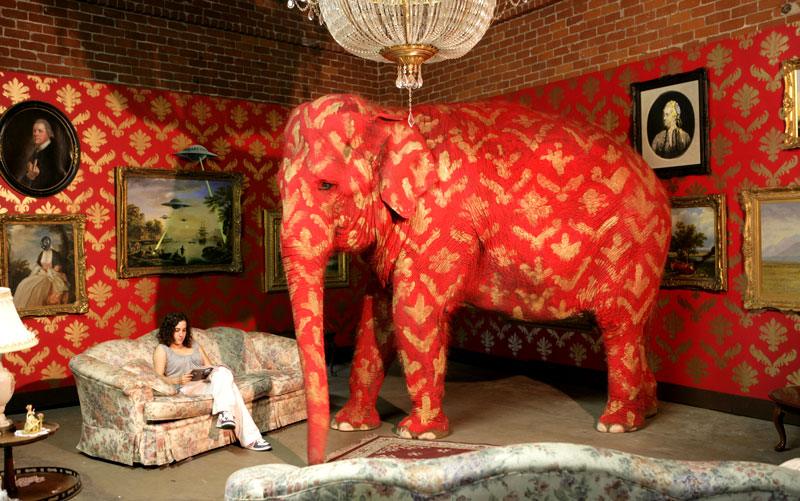
If you watched our previous presentation about “The Age of Uncertainty,” you’ll recall that we referenced Eddie Obeng’s 2012 TED Talk about “The World After Midnight”.
Briefly, Obeng talked about how the rate of change in the world had surpassed humans’ ability to process it; our pace of learning. This tipping point occurred some time around 2000, he claimed, but his main point was that we (a decade or so ago) were still pretending that we could plan and predict things like we could before things like globalisation and the internet emerged.
“We spend our time responding rationally to a world that we understand and recognize but which no longer exists.”
What wasn’t obvious in the 2000s, and was only “an idea worth spreading” in the 2010s, is now an airhorn in the face in the 2020s.
The overall cost of living in Canada has risen by 19.9% since 2020. The US is attacking allies. AI is evolving at an exponential pace and escaping its guardrails. A single man hordes wealth equal to that of 46% of the world’s population. Climate change is at a point where, just last month, the United Nations actually gave up on shepherding mitigation and shifted its approach instead to “limiting overshoot”. Nobody can keep up.
But these issues aren’t the risks. They are reality now. The risk is carrying on as though they don’t exist or are merely temporary. So, if you accept that they aren’t blips, and that in many core ways the next 10 years will be quite different than the last 10, might some life changes be in order?
Well, at a personal level, you might start with any of the 15 “seeds for a better future” that Nate Hagens recently outlined on his Great Simplification podcast.
At a societal level, you might find inspiration in the “Hope Attractor”, a scientifically grounded scenario identified by the Cascade Institute’s Polycrisis Core Model (PCM) representing a future where humanity successfully navigates converging global crises if we adjust in key ways.
For us, it was to leave the toxic political discourse in Alberta, recalibrate our screen time, reconnect with nature, grow some of our own food, learn/relearn valuable manual skills, and of course light up this Big Calm beacon to see who might be interested in similar goals. An oasis from the commotion and an ark for the storm.
“Be the change you wish to see in the world.”
Big Calm is focused on four core things: permaculture guided, resilient infrastructure, convivial community, and cooperative equity. Do these resonate with you too?
As Charles Eisenstein concludes in his excellent and timely book Sacred Economics, which finds opportunity to transition from alienation, competition, scarcity, and necessitated endless growth to a more connected, ecological, and sustainable way of being…
“Community is probably the best investment you can make.”
As you reflect this Thanksgiving, with the noise of referendumbs, gas prices, and AI slop in the background, consider what you might be grateful for in the years ahead, in this changing world. What would a real move in the next year or two might look like? What are the steps to get there (if not for you, then perhaps for your adult children)? Where and how can you live your best life? We’d be happy to chat.
Image: Banksy