First Principles
Guided by permaculture principles, our 37-acre homestead is being transformed into a high-yield, regenerative ecosystem where humans are active participants in the land’s health, rather than mere campers or consumers.
From gravity-fed water systems to emerging food forests, every element of the property is placed to maximize “energy sinks” and minimize waste. Whether you are an experienced grower or a beginner, you aren’t just buying a site; you are joining a stewarded landscape that works with nature to provide food, medicine, and beauty.
Earth Care, People Care, Fair Share
Permaculture is based on a set of 12 design guidelines grounded on ecological, sustainable, and regenerative practices, originally formulated by David Holmgren to create self-sufficient, resilient systems. They focus on earth care, people care, and fair share, emphasizing observation, efficiency, and working with nature rather than against it.
Observe & Interact
Take time to understand site conditions (sun, water, wind) before acting to create effective, tailored designs.
Catch & Store Energy
Develop systems that harvest resources during abundance (e.g. rainwater harvesting, solar energy) for use in times of scarcity.
Obtain a Yield
Ensure the system generates useful, tangible rewards (food, fuel, knowledge) to sustain the work.
Self-Regulation & Feedback
Modify projects to ensure long-term sustainability and learn from mistakes.
Value Renewables
Maximize the use of natural, replenishing resources (e.g. composting, using solar power).
Produce No Waste
Value all resources; by cycling materials, waste becomes a resource (e.g. composting, recycling, composting toilet).
Design from Patterns
Step back to observe patterns in nature (like branches or swales) and use them to inform site design.
Integrate, Not Segregate
Connect elements so they support one another (e.g. placing chicken coops near gardens for pest control and fertilizer).
Use Small & Slow Solutions
Small-scale systems are easier to maintain, use fewer resources, and are more sustainable than large, fast ones.
Use & Value Diversity
Increase resilience by diversifying food sources, income, and ecology to reduce vulnerability to threats.
Use & Value the Edges
The interface between two environments (e.g. riverbanks) are often the most productive and diverse areas.
Respond to Change
Anticipate changes and creatively adapt systems to thrive, rather than just survive.
The Growing Regen Movement
-
Global Trend:
Regenerative Agriculture is cited by the UN as a primary tool for climate adaptation. And the case for solar and other renewable energy grows stronger by the day. -
Local Context:
The Slocan Valley is a historic hub for self-sufficiency and small-scale farming. -
The News Today (Oh Boy):
Rising grocery inflation is driving a 25% increase in interest for "producer-based" lifestyles.
Permaculture Questions
What do we mean by self-sufficiency?
Self sufficiency is the ability of a community to meet the needs of its members and the community as a whole. Every community with a self-sufficiency vision has a different means of achieving it. In our case, self-sufficiency focuses on producing food (gardening, farming, raising small livestock) and collecting resources and energy (water, solar, geothermal). While true self-sufficiency may not be attainable, it is a goal we nonetheless strive for.
Do I have to be a gardener?
No, there’s more to permaculture than that. And while we encourage participation in the garden, the overall land management is a shared cooperative responsibility. One of permaculture’s wise mantras: “Start where you are, do what you can, use what you have.”
Should I have taken a Permaculture Design Course (PDC)?
No, although it can be handy knowledge. Homesteading isn’t easy but it isn’t rocket science either. As Bill Mollison, the “father of permaculture”, once said, “Though the problems of the world are increasingly complex, the solutions remain embarrassingly simple.”
What growing zone is Big Calm in?
The property is unzoned and has two licensed surface water sources – a manmade spring and a small creek – that provide fresh mountain water. For redundancy, and to support the growing community, we’ll also add a well. The log cabin (built in 1969 by the property’s original homesteaders) is still standing but not habitable, while the adjacent forest sauna will need a new roof to become operational again.
The garden, which we revived in 2021, was once certified organic and continues to be managed organically. In 2025, we tripled its fenced size. We are located in Canada Plant Hardiness Zone 7b (USDA Zone 6b).
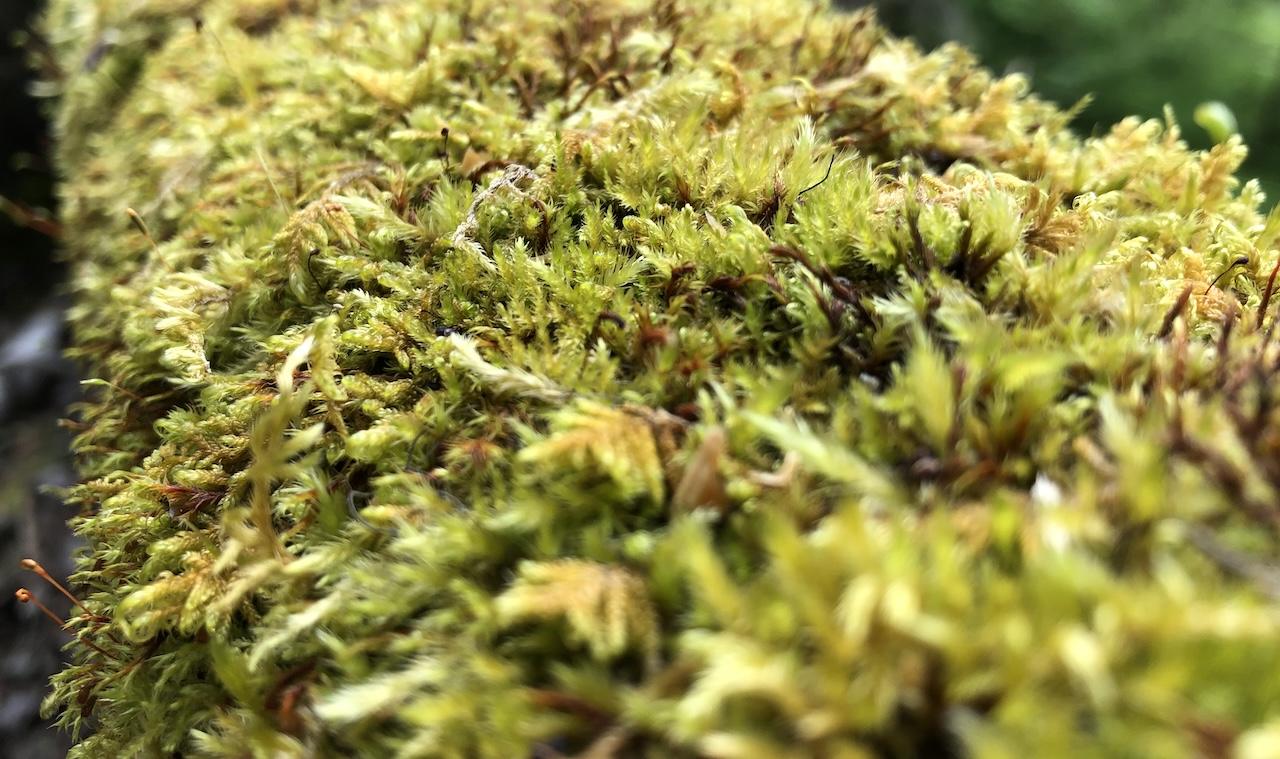
Big Calm is located in North America’s only inland temperate rainforest, which is home to thousands of flora, fungi and fauna including: trees, berries, grasses, ferns, mosses, lichens, fungi,
mammals, reptiles, birds, insects, arachnids, and invertebrates.