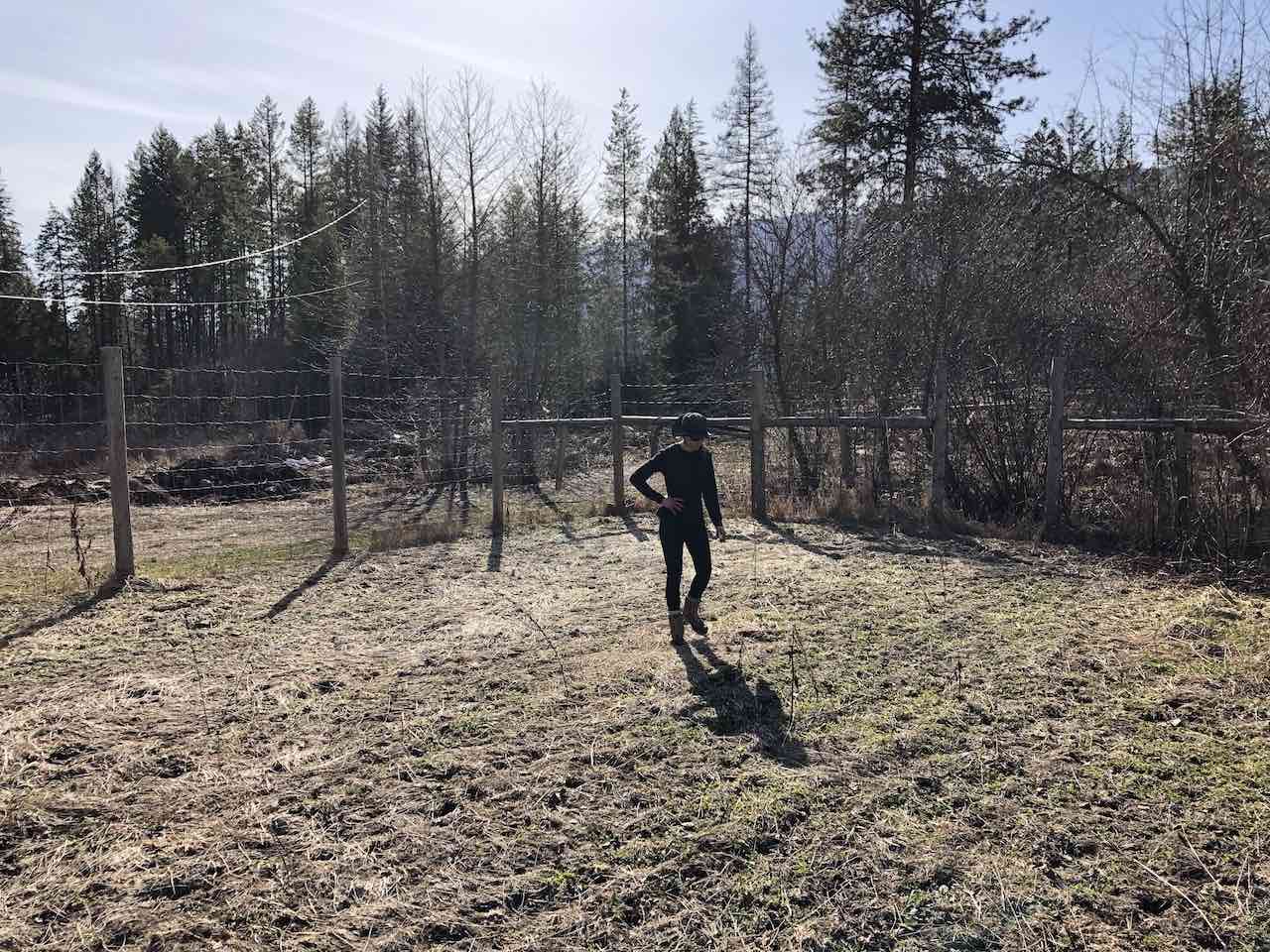
Woman in an unplanted garden at springtime
CategoriesDevelopment

Power to the Permies!

Permie-paralysis – it’s deep and it’s real. It’s the state of having acquired from your permaculture design course (PDC) so much useful information, with so many applications and possibilities, that you are completely overwhelmed.

I felt that way for a long time after finishing my PDC (with Verge Permaculture) until, recently, I decided on a plan. It’s not the grand permaculture garden plan I envisaged, but it’s a plan.

What was the grand permaculture garden plan I had in mind, you ask? Well, I’d convert our entire 56 by 32 foot vegetable garden into a food forest containing all seven plant layers, from ground cover to canopy. 

The problem is, I don’t feel as though I have had enough time to observe the garden and surrounding areas. We moved to BC in September and haven’t experienced a spring yet at Big Calm. How am I supposed to confidently plant a permaculture garden/food forest?

And, despite my plans to have complete permaculture garden design ready-to-go for spring, life got in the way. We’ve simply been too busy developing Big Calm and the Shangri-loft to also plan a permaculture garden.

And so arose the revised, more reasonable plan: plant only annuals this year, saving any permanent decisions until next year, when I have observed the garden through the growing season and have had time to think about what I want to include in my permaculture garden/food forest. 

But, that doesn’t mean I can’t still incorporate permaculture design. This year will be an experiment with annual cover crops (crimson clover) and pest control species (alyssum) grown among vegetables. I highly recommend the West Coast Seeds catalog, which has all of the information one needs to decide on which cultivars to choose.

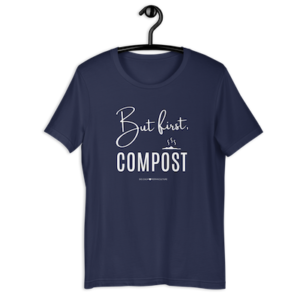
This approach does take some pressure off, because in this case, I think it’s the right one. Plus, it will give me time to work on other things for Big Calm, like (warning: shameless plug) these awesome permaculture-inspired Big Calm t-shirts available to purchase.  
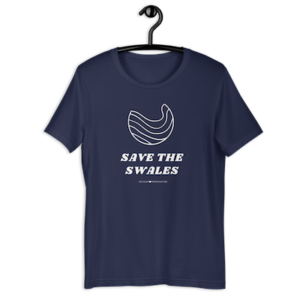
Blue t-shirt that says Save the Swales on a clothes hanger Blue t-shirt that says Chop and Drop It Like It's Hot on a clothes hanger Blue t-shirt that says But First Compost on a clothes hanger

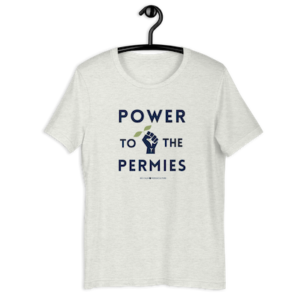
Power to the permies!

White t-shirt that says Power to the Permies on a clothes hanger

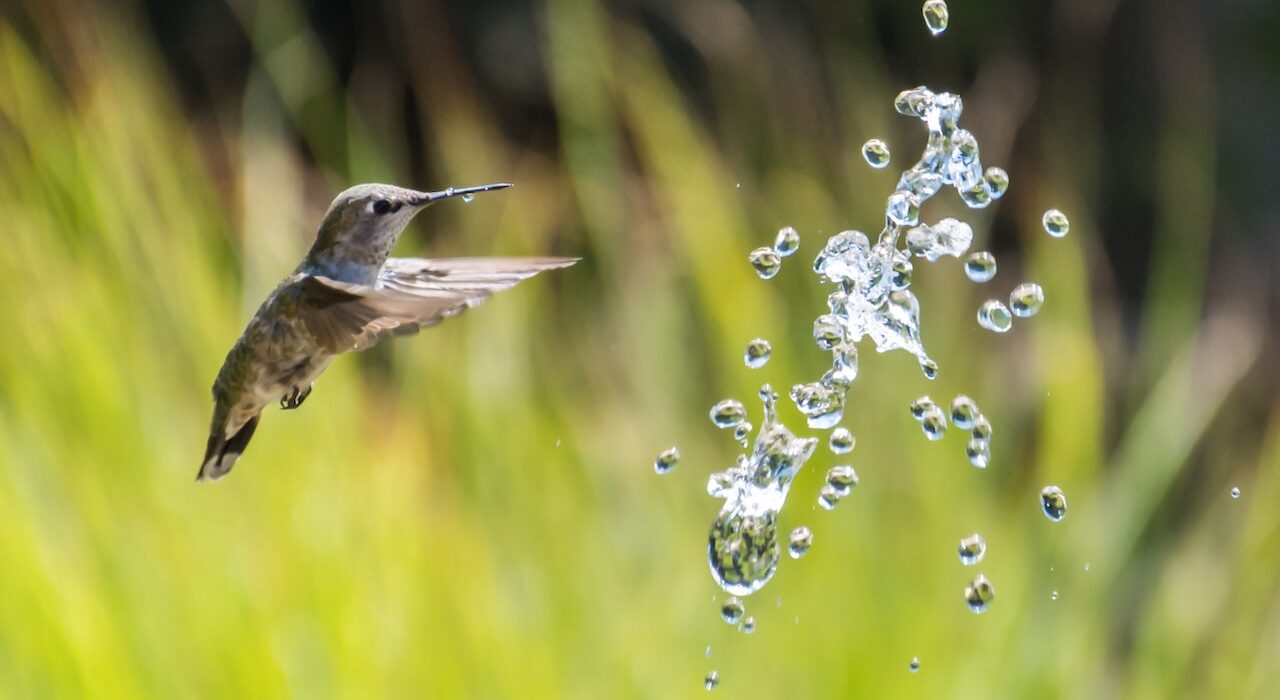
hummingbird flying towards water drops
CategoriesLifestyle,  Tiny Homes

Do What You Can

Earlier today we presented to hundreds at the Global Tiny House Conference. Our talk, “Macro Forces, Market Trends, and #WorkFromHomestead”, offered an overview of the factors motivating us to start and build Big Calm Tiny Homesteads and the importance of attracting likeminded people to its vision.

We looked at how negative macro forces like climate change, the COVID-19 pandemic, and widespread mental health woes are changing people’s behaviours. And we also looked at how positive market trends like the tiny house movement, the shift to remote work, a rural renaissance, and the rise of regenerative are emerging opportunities. These are all summarized in more detail here.

circular chart of macro forces and market trends for Big Calm investors

As the grandfather of permaculture, Bill Mollison, once said, “Though the problems of the world are increasingly complex, the solutions remain embarrassingly simple.”

One of permaculture’s other wise mantras: “Start where you are, do what you can, use what you have.” Which recalls the Story of the Hummingbird…

One day a devastating fire broke out in a forest – a huge woodlands area was suddenly engulfed by a raging wildfire. Frightened, all the animals fled their homes and ran out of the forest. As they came to the edge of a stream, they turned to watch the fire. They felt discouraged and powerless.


They bemoaned the destruction of their homes. Every one of them thought there was nothing they could do about the fire–except for one little hummingbird.


The littlest of creatures decided it would do something. It swooped into the stream and picked up a few drops of water and went directly into the forest and sprinkled them on the fire. Then it went back to the stream and did it again, and it kept going back, again and again and again.


All the other animals watched in disbelief. Some even tried to discourage the hummingbird with comments like, “Don’t bother,it is too much, you are too little, your wings will burn, your beak is too tiny, it’s only a drop, you can’t put out this fire.”


And as the animals stood around disparaging the little bird’s efforts, the bird noticed how hopeless and forlorn they looked. Then one of the animals shouted out and challenged the hummingbird in a mocking voice, “What do you think you are doing?”


And the hummingbird, without wasting time or losing a beat, looked back and said, “I am doing what I can.”

And that’s what we’re doing; we’re doing what we can. To acknowledge the forces we can’t control and recognize the trends we can harness – to create something special by supporting people who are eco-minded, improving self-reliance and food security, building a collaborative/supportive local community, and have fun doing it!

Photo by Levi Jones on Unsplash

white neon sign that says Do Something Great
CategoriesLifestyle

The Space Between

Surrounded by boxes of what we’re taking to B.C., it doesn’t feel like we’re really “living” in Calgary anymore. There’s still a month until we move, and it’s as though we’re somewhere in between.

It’s given us a lot of time to think about what we want to do with Big Calm. The first objective is to finish the Shangri-loft, so we can move in. I want our plans for both Big Calm and the Shangri-loft to be guided by the principles and ethics of permaculture, so we are thinking about ways to efficiently capture and store energy (solar panels, solar thermal, batteries, electric generators, etc.) while ensuring there are redundancies in place. 

Here in Calgary, we are in a condo building with 47 units, but we hardly know anyone – I certainly wouldn’t feel comfortable reaching out to a neighbour if we needed anything. We’re surrounded by people, but there is no community. We decided that we want to build one at Big Calm, and have established our vision: 

To create an ecologically sustainable, self-reliant tiny home community, guided by the ethics of permaculture, and strengthened by collaboration, mutual support and the diversity and skills of its members.

We will call the Shangri-loft home while we establish the first phase of Big Calm, after which the Shangri-loft will serve as a shared community space. We plan to incorporate other elements, including other community gathering spaces, food garden beds, a greenhouse and eventually, a food forest. 

There is a lot to consider, and we want to be thoughtful in approach. We can’t wait to share more (per Geoff Lawton: 100 hours of thinking for 1 hour of work). 

Have ideas for us? Drop us a line!

Photo by Clark Tibbs on Unsplash

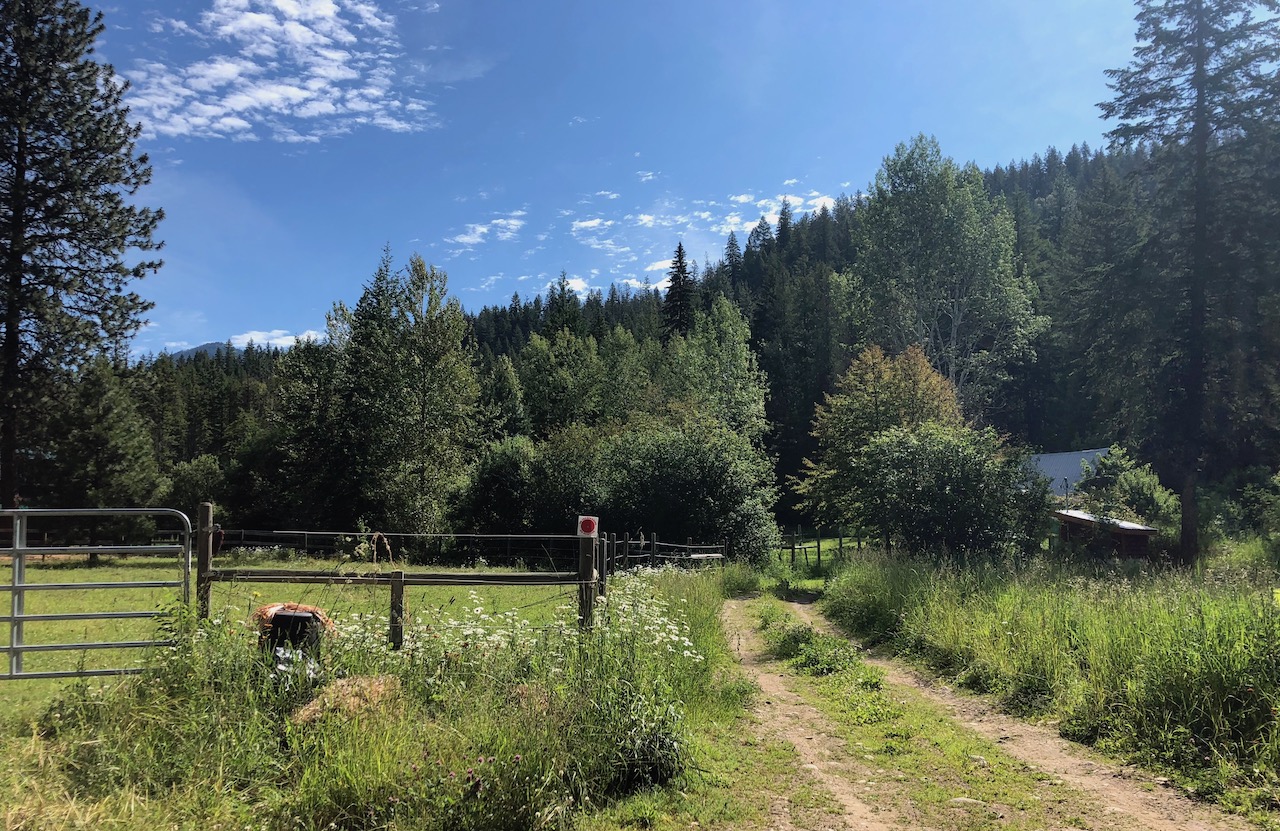
sunny morning view of a homestead driveway and paddock
CategoriesLifestyle

We Found It!

Last summer, my husband and I went on our second road trip across B.C. to look at properties. We knew we wanted to get closer to nature and become more self-reliant, but didn’t have many plans beyond that. The goal of the trip was to decide where in B.C. we wanted to move.

We fell in love with the Slocan Valley. It’s perfectly situated between our beloved Nelson and the up-and-coming Nakusp we just discovered, with beautiful views and the most down-to-earth people (though we found those throughout our travels).

One of the properties we saw, near Winlaw, really stood out to my husband. He saw its potential immediately: it’s unzoned, has two water sources, and a cleared area that could be used for a variety of purposes. I was skeptical as the main residence, a cabin, needed some work, but he couldn’t shake the desire to pursue it. Fortunately, it was still on the market when we decided to act.

The pandemic had a major impact on my outlook: it eliminated all of my doubts. It wasn’t until I witnessed the faltering supply chains that I realized how vulnerable we were. It was then that I saw the property, and it’s potential to make us more self-reliant, as a lifeline. The pandemic made me see the need and permaculture made me see the way.

We are set to close at the end of the month. I know there is a ton of work to do to get the property to where we want it to be. I also know it will be harder than I think. But, for us, it’s the only option.

drawing a permaculture design blueprint
CategoriesLifestyle

Start Where You Are, Do What You Can, Use What You Have

I have been interested in permaculture for some time, recognizing its nature-guided, systemic approach to sustainable living as a set of principles I’d like to adopt.

Last month, I was thrilled to start Verge Permaculture’s online design course, where I first heard the maxim that serves as the title of this post (which, I should note, is unsolicited).

I am loving this course so far. It’s easy to get overwhelmed by the amount of information, but I appreciate the simplicity, obviousness even, of the permaculture approach: let nature guide the design and development of a resilient, and ideally, regenerative system.

As one Verge instructor said: nature has been “designing itself” for more than four billion years. Who are we to assume to know better? We are fortunate that nature is antifragile, but it can only tolerate so much devastation.

It has become clear to me that humankind, generally speaking, has lost its respect for nature, to its own detriment. We have been focused on extracting from the earth as much as we can to sustain our unsustainable lifestyles, and we haven’t been giving back. And, it’s not just an error of omission – our extravagances have increasingly been wreaking havoc on the planet.

Climate change, pandemics, and politics aside, surely everyone knows that you can’t grow food in dirt. You need soil, a living ecosystem all its own, which the earth is losing at alarming rates. Take care of the earth, or count your numbered days.

This post was not intended to be doom and gloom, rather, hopeful in nature (pun intended). The Verge team, as well as its 300+ students, have given me hope. Permaculture can easily be practiced by anyone who is patient enough to observe and design based on natural ecosystems. When we take care of nature, we take care of ourselves.

When I get overwhelmed by how to design the perfect permaculture guild or rainwater harvesting system, I remember that permaculture is an iterative process, and to just start where I am, do what I can and use what I have.